
Keeping Dust Out of Your Wardrobe in a Pakistani City
If clothes need airing before you can wear them, the wardrobe is not doing its job. That is a construction problem more than a cleaning one.
Dust reaches stored clothing through gaps: around doors that do not close evenly, through sliding door overlaps, through open shelving, and through the gap above a wardrobe that stops short of the ceiling. Sealing those paths during manufacture does more than any amount of cleaning afterwards. Humidity is the second problem, and it needs the opposite treatment, because a perfectly sealed wardrobe with no airflow traps moisture.
How does dust actually get in?
- Uneven door closure. A door that touches at the top but leaves a gap at the bottom is an open channel. This is usually a hanging and adjustment issue rather than a design one.
- Sliding door overlaps. Sliding panels overlap rather than seal, so there is always a path at the edges and at the meeting point. This is inherent to the mechanism.
- The gap above the wardrobe. A unit that stops short of the ceiling creates a horizontal ledge that collects dust and a void above that is impossible to clean.
- Open shelving. Nothing stops dust at all, which is why open storage looks excellent in photographs and needs constant maintenance in a Lahore bedroom.
- Back panel gaps. A poorly fitted back leaves a route from the wall cavity into the wardrobe.
What can be done during manufacture?
Most of the solution is built in rather than added later.
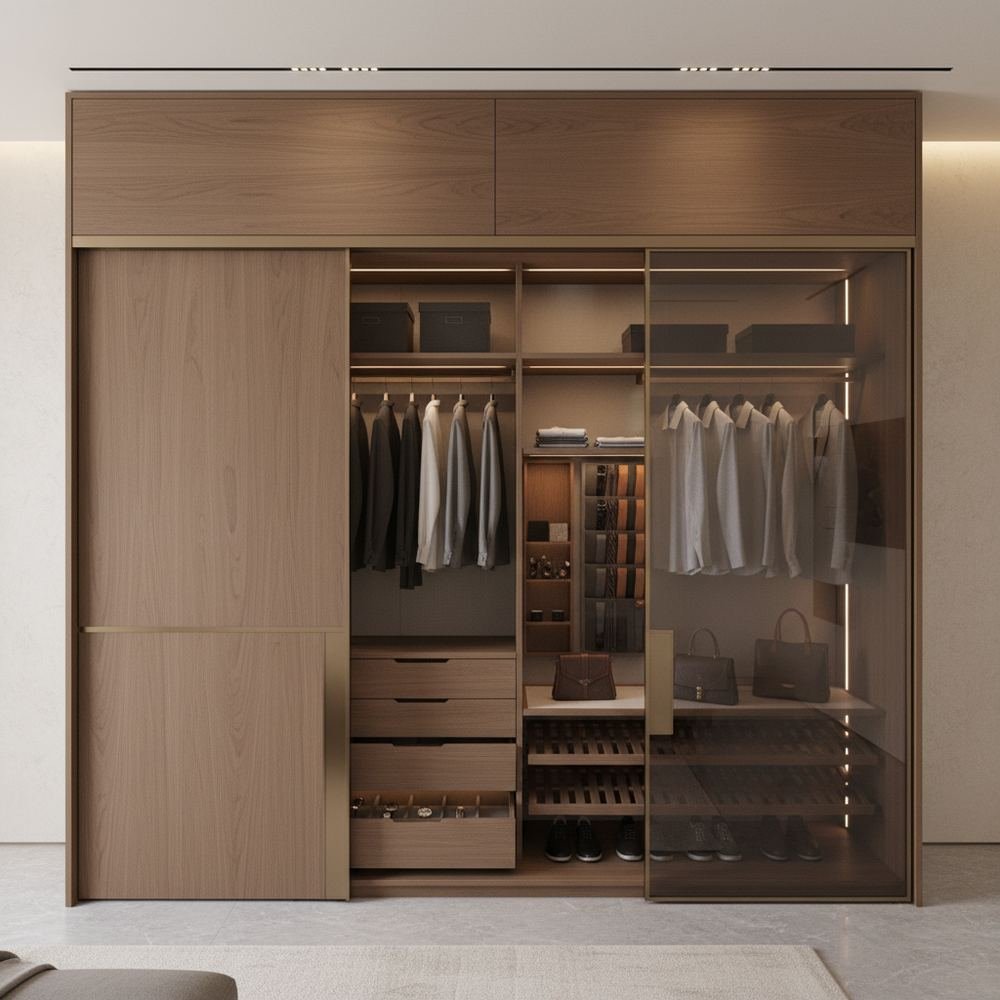
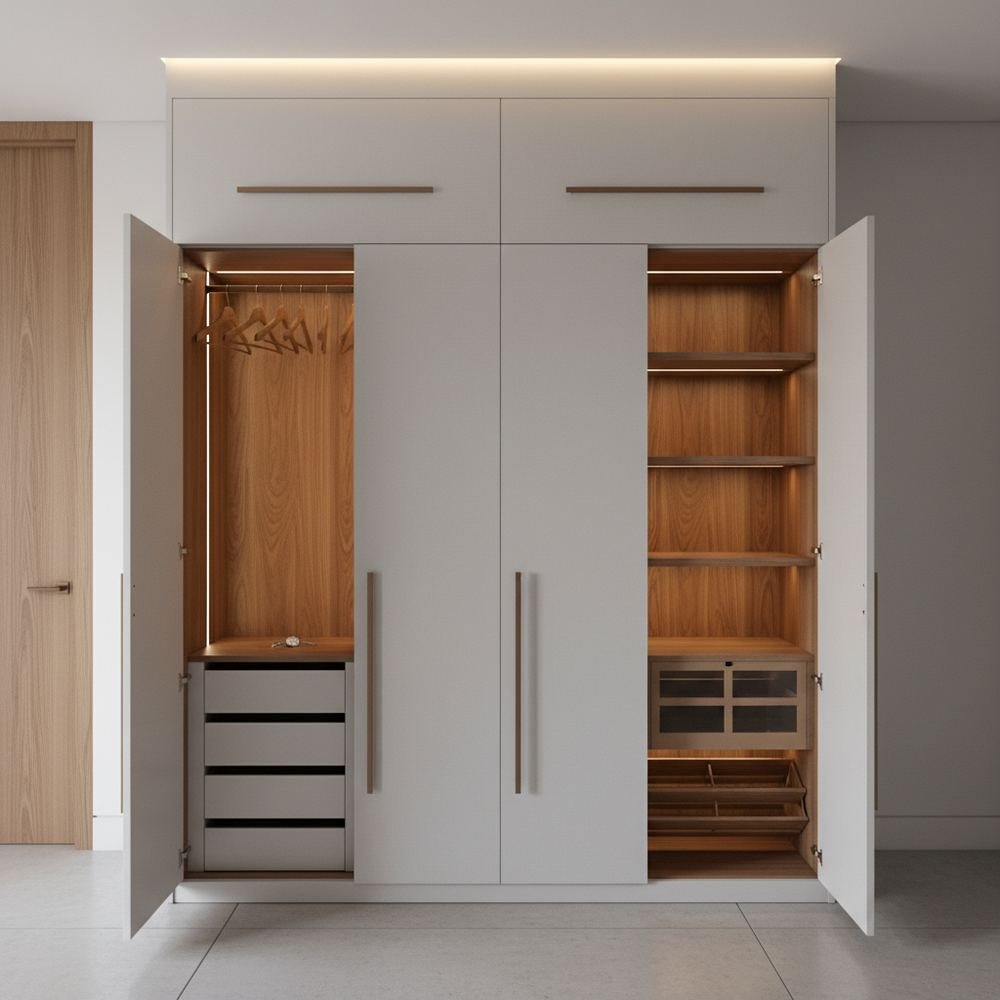
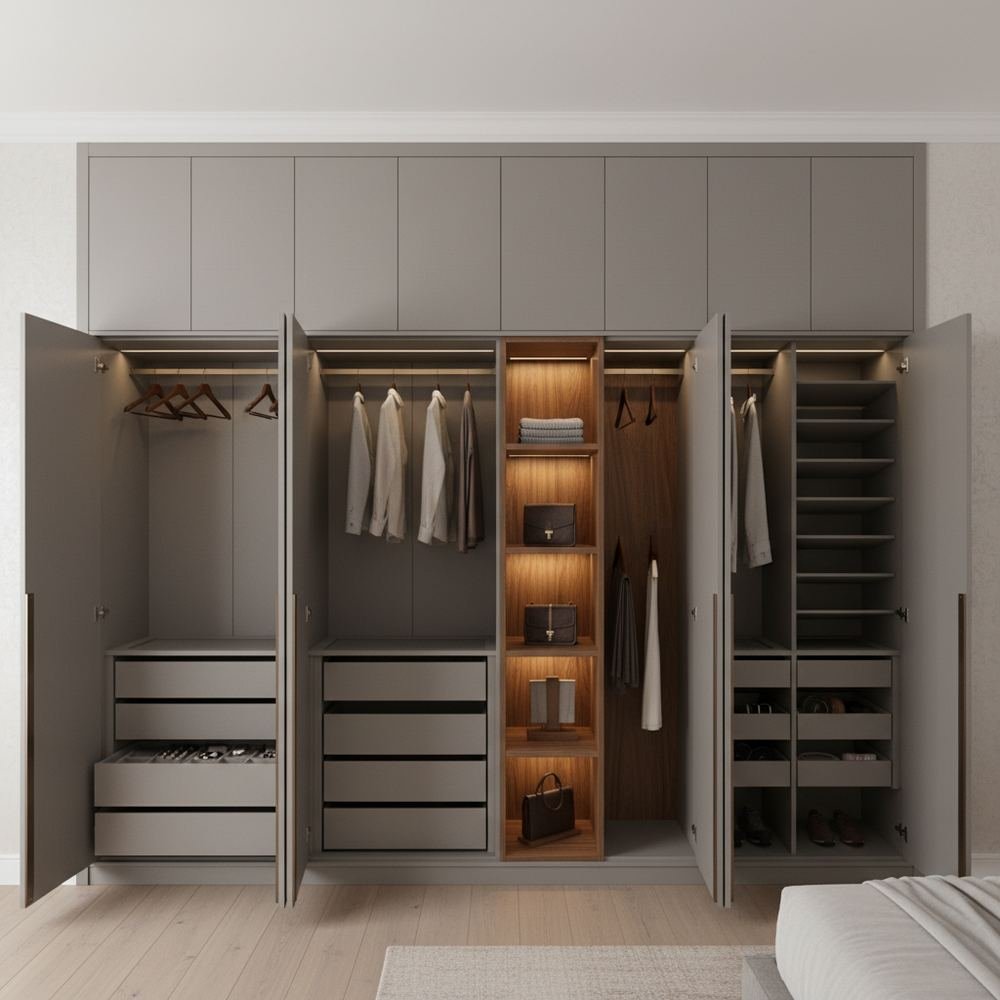
Run the wardrobe to the ceiling. This removes the dust ledge entirely, adds a loft section for rezai and seasonal bedding, and makes the unit read as part of the room rather than furniture pushed against a wall. It is the single most effective change.
Choose swing doors where the room allows. A hinged door closes onto the carcass all the way round, which is far closer to a seal than a sliding overlap. Where clearance forces sliding, accept that some dust will enter and plan storage accordingly.
Fit the back panel properly and scribe the unit to the wall, so there is no gap along the sides or the top.
Put occasional wear behind doors. Everyday clothing is worn often enough that dust does not settle. Formal and embroidered pieces, worn a few times a year, belong behind closed fronts.
Does a sealed wardrobe cause humidity problems?
It can, and this is the tension that has to be managed rather than solved in one direction.
A wardrobe full of textiles in a humid climate holds moisture. If it is opened daily, air exchanges naturally and this is rarely an issue. If a section is opened twice a year, moisture sits in it, and stored fabric develops the musty smell people associate with old wardrobes.
The practical answers are simple. Open the rarely used sections occasionally rather than only when you need something from them. Store everything completely dry, since clothing put away slightly damp is the most common cause of odour. And avoid pressing a wardrobe flat against a damp external wall, where moisture enters from behind.
If a wall has a known damp problem, resolve it before fitting joinery against it. No board specification compensates for a wet wall.
How should clothing be stored?
- Everything clean and dry before it goes in. Body oils and food residue attract insects and set into stains over months.
- Heavy embroidered pieces hanging, not folded, so the work is not crushed. This is why genuine full length hanging matters for saris and lehngas.
- Breathable covers rather than plastic for long term storage. Plastic traps moisture against fabric.
- Some space between hanging items, since a packed rail prevents air moving and creases everything.
- Seasonal items in the loft, which keeps the main hanging run usable rather than congested.
What about insects?
Silverfish and moths are attracted to natural fibres, and to residue on clothing that was stored unwashed. The primary defence is putting things away clean.
Beyond that, a wardrobe that is dry and occasionally aired is far less hospitable than one that is damp and permanently closed. Traditional deterrents work for many households, and whatever you use should not sit in direct contact with fabric.
Check stored items when the seasons change. Damage found early is a small problem, and damage found after a year usually is not.
Are mirrored or glass fronts harder to keep clean?
They show marks more, but they do not admit more dust. A mirrored front on a wardrobe seals exactly as well as a solid one of the same construction.
The trade off is fingerprints rather than dust, and it is the same trade off as gloss versus matte anywhere else. Handles reduce it, because the front gets pulled by the handle rather than pushed by hand.
A mirrored front does two useful things in a Pakistani bedroom: it removes the need for a separate mirror, and it makes a small room read larger.
What about the loft section?
The loft is where dust problems concentrate, because it is opened least and reached least.
Fit it with doors that match the rest of the wardrobe rather than leaving it open. Store bedding in breathable covers. And when you swap seasonal bedding in and out, take the opportunity to wipe the shelf and leave the doors open for a while.
A loft with no doors is the least useful storage in the house, because everything in it needs washing before use.
Building it right
Grains builds wardrobes to the ceiling with fronts hung to close on an even line, backs fitted properly and lofts sized for folded rezai, all manufactured at our own facility on Raiwind Road with imported boards, hinges and channels and soft close hardware as standard. Our own teams install them and come back to adjust anything that settles in the first weeks. Measurement, 3D design and estimate are free. Message WhatsApp +92 320 4443864, or see the range on our services page and plan the rest of the room with beds and bedroom designs.
Questions, answered.
Close the paths it uses. Run the wardrobe to the ceiling so there is no dust ledge or void above, use swing doors where clearance allows since they close onto the carcass all round, fit the back panel properly and scribe the unit to the wall, and keep occasional wear behind closed fronts rather than open shelving.
Yes, inherently. Sliding panels overlap rather than seal, so there is always a path at the edges and where the panels meet. A hinged door closes onto the carcass all the way round. Where clearance forces sliding, accept some dust ingress and keep formal clothing in the most enclosed sections.
Usually moisture. A wardrobe full of textiles holds humidity, and a section opened only twice a year never exchanges air. Clothing put away slightly damp is the most common single cause. Store everything completely dry, open rarely used sections occasionally, and avoid fitting a wardrobe against a damp external wall.
No, use breathable covers instead. Plastic traps moisture against the fabric, which in a humid climate is what produces odour and mildew. Also leave some space between hanging items, since a packed rail stops air moving and creases everything stored in it.
Hanging rather than folded, so the embroidery is not crushed, which is why genuine full length hanging matters in a Pakistani wardrobe. Keep them clean before storing, use breathable covers, and place them in the most enclosed section of the wardrobe since they are worn only occasionally.
Yes. The loft is opened least and therefore collects the most dust, so an open loft means everything in it needs washing before use. Fit doors matching the rest of the wardrobe, store bedding in breathable covers, and wipe the shelf and air the section when you swap seasonal bedding.
Planning this for your own home?
We measure your space in Lahore free of charge, show you a 3D design before anything is cut, then manufacture and install it with our own teams.