
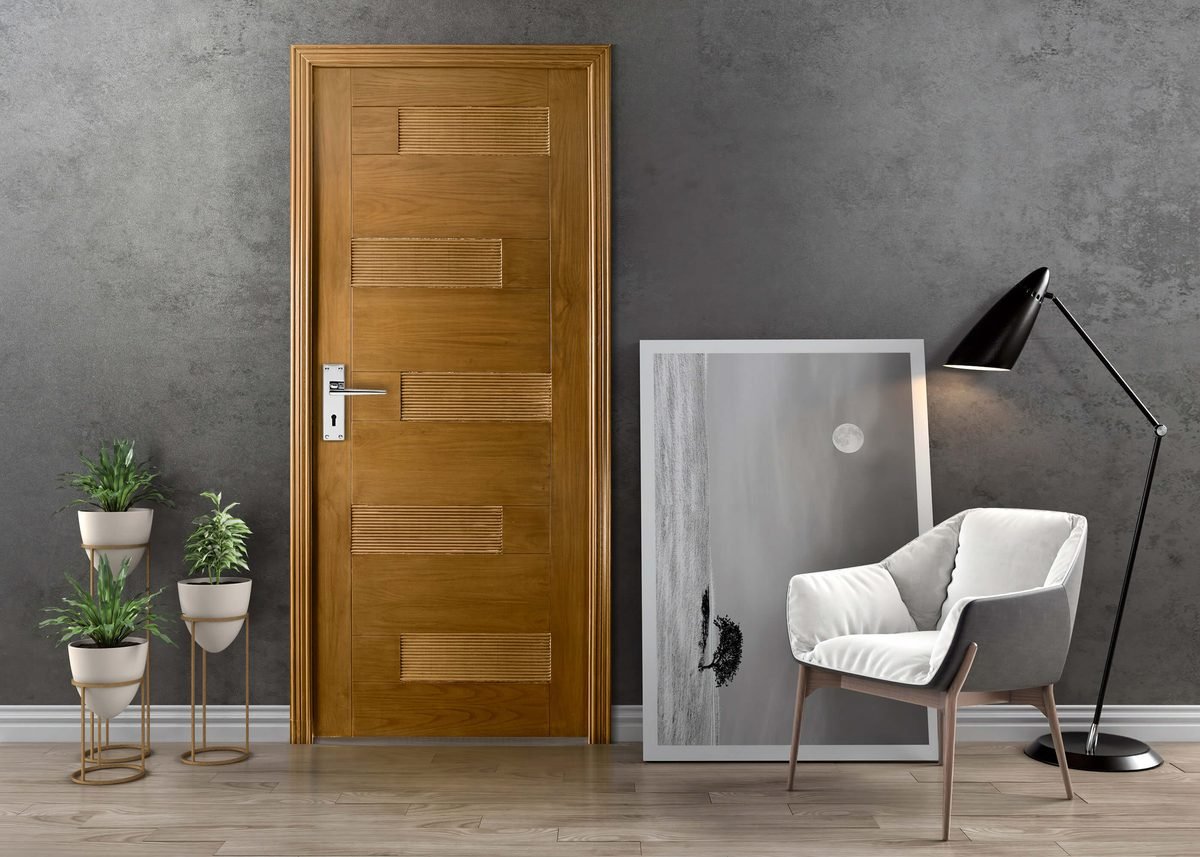
Main Door Security: What Actually Stops a Forced Entry
Almost nobody forces a lock. They force the frame, and the frame is the part nobody asks about.
A main door is only as strong as its weakest component, and that is rarely the lock. Forced entries usually succeed at the frame, at the fixing into the masonry, or at the hinges. Specify the whole assembly together, leaf, frame, fixing and hardware, and the door becomes genuinely difficult. Specify an expensive lock on a light frame and you have bought reassurance rather than security.
Where do doors actually fail?
- The frame splits. Force applied near the lock transfers into the frame at the strike plate. A light frame, or one poorly anchored, splits and the door opens with the lock still engaged.
- The fixing pulls out. The whole frame comes away from the masonry because it was fixed with too few anchors, or anchors that never reached solid material.
- The hinges give. On the hinge side, undersized hinges or short screws let the leaf be levered away.
- The leaf itself. A hollow or light leaf can be broken through even when everything holding it stays intact.
- Glazing beside the lock. A glazed panel within reach of the latch defeats the lock entirely.
Notice that only one of these is about the lock, and it is not the most common.
What makes a frame secure?
Three things: section, material and anchoring.
The frame needs enough section to resist splitting at the strike plate, which is where the force concentrates. A frame sized for appearance rather than load will split there first.
The material should match the leaf. A heavy hardwood leaf in a light frame will loosen that frame over years of ordinary use, let alone under force.
Anchoring matters most. The frame must be fixed into solid masonry at multiple points down both jambs, not just at the top and bottom. Fixings that go into plaster or into a gap achieve very little, and this is invisible once the door is finished.
Ask specifically how many fixings are used, where they are placed, and what they anchor into. A maker who has an immediate answer has thought about it.
What about the leaf?
Weight is the honest proxy for strength. A solid hardwood leaf resists being broken through, and its mass alone makes forcing harder.
An engineered solid core gives similar resistance with better dimensional stability through monsoon humidity, which matters for a door that faces both sun and rain.
A hollow or light leaf is unsuitable for a main entrance regardless of what is fitted to it.
The leaf also has to keep working as a door. A very heavy leaf needs enough hinges, correctly sized, or it sags over time until it catches on the floor. Sag is not just an irritation, because a door that no longer sits square does not engage its lock properly.
Which hardware details matter?
- The strike plate and its fixings. A strike plate held by short screws into the frame lining is a weak point. Long fixings reaching structural material behind the frame make a substantial difference.
- Hinge size and count, matched to the leaf weight, with screws long enough to reach beyond the frame lining.
- Hinge bolts on the hinge side, which resist levering even if a hinge is attacked.
- Multi point engagement, which spreads force across the height of the door rather than concentrating it at one place.
- A viewer or camera, so the door does not have to be opened to see who is there. This is a genuine security measure, not an accessory.
Does glazing compromise a main door?
It can, and it depends entirely on position.
Glazing within arm's reach of the latch or the lock defeats the lock, because the glass becomes the easiest route. Glazing high in the leaf, or in a sidelight well away from the latch, is a much smaller compromise.
If light in the entrance hall is the reason for glazing, consider whether it can come from a fanlight above the door or a window elsewhere instead. That gives the light without putting glass beside the lock.
Where glazing near the lock is unavoidable, the glass specification becomes part of the security decision rather than an aesthetic one.
What about the rest of the entrance?
A secure door in a weak surrounding achieves less than it should.
Check that the wall around the frame is solid rather than a thin infill panel. Check that any adjacent window is not an easier route. Consider lighting at the entrance, since a well lit doorway is a meaningful deterrent and costs very little to plan during electrical first fix.
If there is a gate or an outer door, decide which one carries the security requirement. Both being moderately secure is usually worse than one being properly specified.
Does a carved traditional door have to be less secure?
No. Carving is applied to the face of the leaf and does not inherently weaken it, provided the leaf has enough thickness beneath the carving and the carving does not create a thin section.
What matters is that the decorative decision and the structural decision are made separately. A beautifully carved door on a properly specified frame with correct anchoring is both. Problems arise when the entire budget and attention go to the carving and nothing is left for the frame and the fixing.
The practical cost of carving is dust rather than security, since deeply carved surfaces need more cleaning in Pakistani cities.
What should you ask before ordering?
- What frame section, in what material, and how is it anchored into the wall?
- How many fixings, at what spacing, and into what?
- How many hinges, at what size, for this leaf weight?
- How is the strike plate fixed, and how long are those fixings?
- Is the leaf solid, and how was the timber seasoned?
- Are all six faces sealed, including the top and bottom edges?
Having one made
Grains has been making main and interior doors in Pakistan for over 65 years, manufactured at our own facility on Raiwind Road and hung by our own teams, with the leaf, frame and fixing specified together rather than bought as separate items from separate suppliers. That is the difference that decides whether a door holds. We measure the opening and give a written estimate after a free visit. Message WhatsApp +92 320 4443864, or see the wider range on our services page.
Questions, answered.
The whole assembly rather than the lock. Most forced entries succeed at the frame, at the fixing into the masonry, or at the hinges. A heavy solid leaf, a frame with enough section to resist splitting at the strike plate, and multiple anchors into solid masonry down both jambs matter more than the lock brand.
Only as part of a properly specified assembly. A high grade lock on a light frame poorly anchored into the wall achieves very little, because the frame splits or pulls away with the lock still engaged. Spend on the frame section, the anchoring and the hinges first.
Into solid masonry at multiple points down both jambs, not just at the top and bottom. Fixings that reach only plaster or a cavity achieve almost nothing, and this is invisible once the door is finished. Ask how many fixings are used, at what spacing, and what they anchor into.
It depends entirely on position. Glazing within arm's reach of the latch defeats the lock because the glass becomes the easiest route. Glazing high in the leaf, or in a sidelight well away from the latch, is a much smaller compromise. A fanlight above the door often gives the light without the risk.
Because they are under hinged. A heavy leaf needs enough hinges, correctly sized, with screws long enough to reach beyond the frame lining. Without that the leaf sags over time. This matters for security too, since a door that no longer sits square does not engage its lock properly.
Not inherently, provided the leaf has enough thickness beneath the carving and no thin sections are created. The risk is budgetary rather than structural: problems arise when attention and money go entirely to the carving and nothing is left for the frame section and the anchoring.
Planning this for your own home?
We measure your space in Lahore free of charge, show you a 3D design before anything is cut, then manufacture and install it with our own teams.