
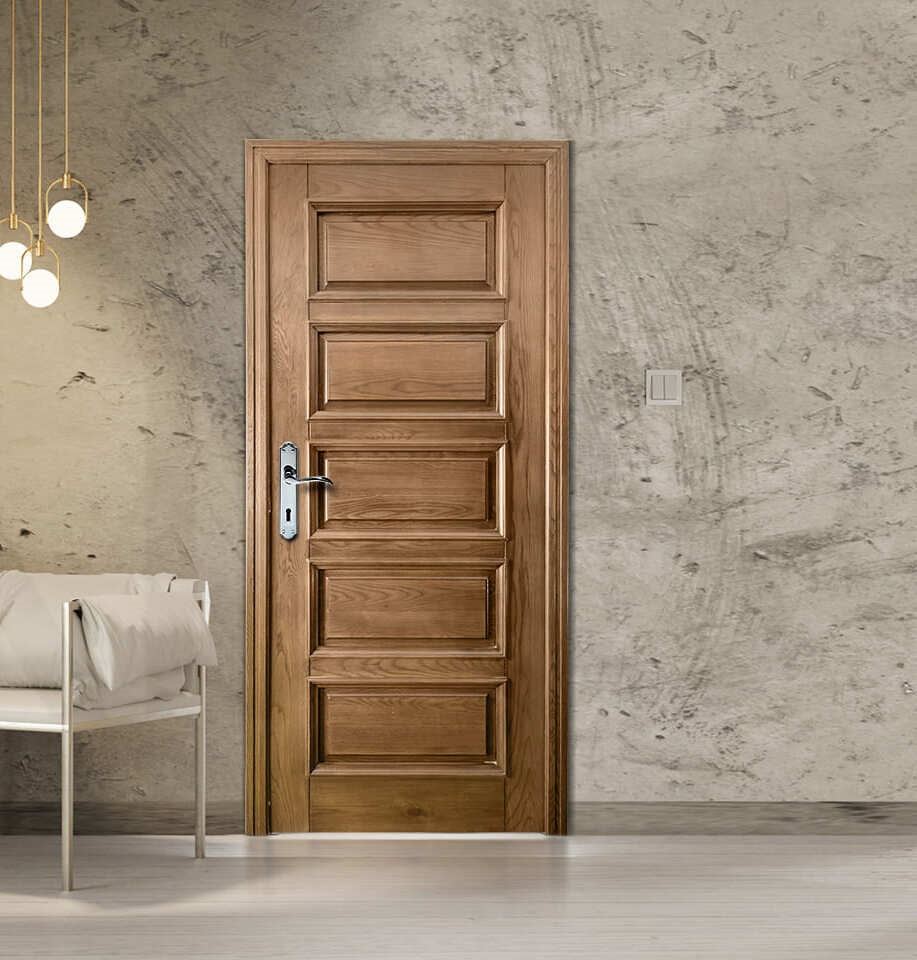
Door Hardware: The Parts That Decide How a Door Feels
You judge a door by its hardware without realising it. The weight of the handle and the way it latches is most of the impression.
Door hardware is the part of a door you actually touch, and it decides both how the door feels and how long it keeps working. Hinges carry the leaf for decades, the latch and handle are operated thousands of times, and both are usually specified last and cheapest. A well made door on poor hardware feels like a poor door within a couple of years.
Why do hinges matter more than people think?
Because they carry the entire weight of the leaf, continuously, and every time the door is opened that weight is levered against their fixings.
An under hinged door sags. Once it sags, the leaf drops at the latch side and begins to catch on the floor or against the frame. At that point the door no longer engages its latch properly, which matters for both convenience and security.
Hinge count and size must match the leaf weight. A heavy solid hardwood main door needs more and larger hinges than a light interior door, and the screws must be long enough to reach beyond the frame lining into solid material. Short screws into a lining are the most common hinge failure.
Hinges also need to be adjustable or at least accurately set, because a door that is hung slightly out of square never closes cleanly.
What makes a handle feel good?
Weight and mechanism, not appearance.
A handle with a solid body and a well made internal spring returns cleanly to horizontal and operates with a definite action. A light handle with a weak spring gradually starts to droop, which is one of the clearest signs of cheap hardware in an otherwise good house.
The rose or backplate matters too. A thin plate held by small screws works loose over years of use, and a loose handle plate is both irritating and progressively damaging to the door face.
Finish affects maintenance rather than function. Polished finishes show fingerprints and, in areas with hard water and high humidity, can spot. Brushed and satin finishes hide daily marks better.
Which locks suit which doors?
- Main entrance. The security requirement sits here, and it depends far more on the frame and its anchoring than on the lock itself. Multi point engagement spreads force across the height of the door rather than concentrating it at one place.
- Bedrooms. Privacy rather than security. A simple latch with a privacy turn is usually right, ideally with an emergency release from outside.
- Bathrooms. The same, and the emergency release matters more here because bathrooms are where someone can be locked in.
- Store rooms and utility. A latch is often enough.
- Internal doors generally. Consider whether they need to lock at all. Locks on doors that are never locked simply add cost and another thing to fail.
What about the strike plate?
This is the single most overlooked security component in a house.
The strike plate is the metal plate in the frame that the latch engages. When force is applied to a door, it concentrates exactly there. A strike plate held by short screws into the frame lining offers very little resistance, because the screws pull out of soft material long before the lock itself fails.
Long fixings that reach through the lining into structural material behind the frame make a substantial difference, at essentially no extra cost. It is one of the highest value details available on a main door, and almost nobody asks about it.
Do interior doors need closers or stops?
Door stops are worth fitting almost everywhere. Without one, a door opening freely will eventually put its handle through the wall, and the damage appears at exactly handle height where it is most visible. A floor or wall mounted stop costs very little and prevents that permanently.
They matter most where a door opens near a wardrobe or joinery, since damage to a finished cabinet front is far more expensive than damage to a wall.
Closers are rarely needed on interior residential doors. They are useful where a door must not be left open, but on ordinary rooms they make doors feel heavy and awkward.
What hardware do windows need?
Handles and stays that hold a window in position rather than letting it swing in wind, and locks that engage properly on ground floor and accessible openings.
In Pakistani homes, dust makes window hardware stiffen over time, particularly on sliding sections where grit collects in the track. Tracks should be cleanable rather than sealed, and hardware chosen so it can be lubricated.
Where security matters, remember that a window beside a door can be an easier route than the door itself, so the two should be considered together rather than separately.
Where does hardware quietly fail?
- Screws into soft or thin material, which loosen and then strip. Once a screw hole is stripped, refixing in the same place rarely holds.
- Springs in handles, which weaken and let the handle droop.
- Latch mechanisms that stiffen with dust and lack of lubrication.
- Finishes that wear through at the point of most contact, usually the underside of the handle.
- Hinges that were adequate for the leaf when new but not for a leaf that has absorbed humidity and gained weight.
Should all the hardware match?
Within a floor or a zone, yes. Consistency is a large part of what makes a house feel considered, and hardware is seen constantly at close range.
The main entrance is a reasonable exception, since it has a different function and is often a different style of door entirely.
Hardware is also the cheapest way to change how a house feels later. The same doors with different handles read very differently, and replacing handles is a job of minutes rather than days.
Specifying it properly
Grains makes doors at its own facility on Raiwind Road and hangs them with its own teams, with the leaf, frame, hinges and fixings specified as one assembly rather than bought separately and combined on site. That is what determines whether a door still closes cleanly in ten years. We measure every opening individually, since openings in a real house are rarely identical, and give a written estimate after a free visit. Message WhatsApp +92 320 4443864, or see the range on our services page.
Questions, answered.
Enough for the leaf weight, so a heavy solid hardwood main door needs more and larger hinges than a light interior door. Screws must be long enough to reach beyond the frame lining into solid material, since short screws into a lining are the most common hinge failure. An under hinged door sags and starts catching.
The internal spring has weakened, or the rose and backplate have worked loose. A handle with a solid body and a well made spring returns cleanly to horizontal, while a light one with a weak spring gradually droops. This is one of the clearest signs of cheap hardware in an otherwise good house.
It is the metal plate in the frame that the latch engages, and force applied to a door concentrates exactly there. A strike plate held by short screws into the frame lining offers little resistance, because the screws pull out of soft material long before the lock fails. Long fixings reaching structural material behind the frame cost almost nothing and matter a great deal.
Almost always. Without one, a door opening freely will eventually put its handle through the wall at exactly handle height where the damage is most visible. Stops matter most where a door opens near a wardrobe or other joinery, since damage to a finished cabinet front is far more expensive than to a wall.
The main entrance needs proper security, which depends more on frame anchoring and multi point engagement than the lock itself. Bedrooms and bathrooms need privacy latches with an emergency release from outside. Many internal doors need no lock at all, and fitting one just adds cost and another thing to fail.
Within a floor or zone, yes, because hardware is seen constantly at close range and consistency is much of what makes a house feel considered. The main entrance is a reasonable exception. Hardware is also the cheapest way to change how a house feels later, since handles can be swapped in minutes.
Planning this for your own home?
We measure your space in Lahore free of charge, show you a 3D design before anything is cut, then manufacture and install it with our own teams.