
Cove Lighting: Why It Looks Wrong When It Goes Wrong
Cove lighting either looks seamless or it looks like a mistake. The difference is a few decisions made before anything is built.
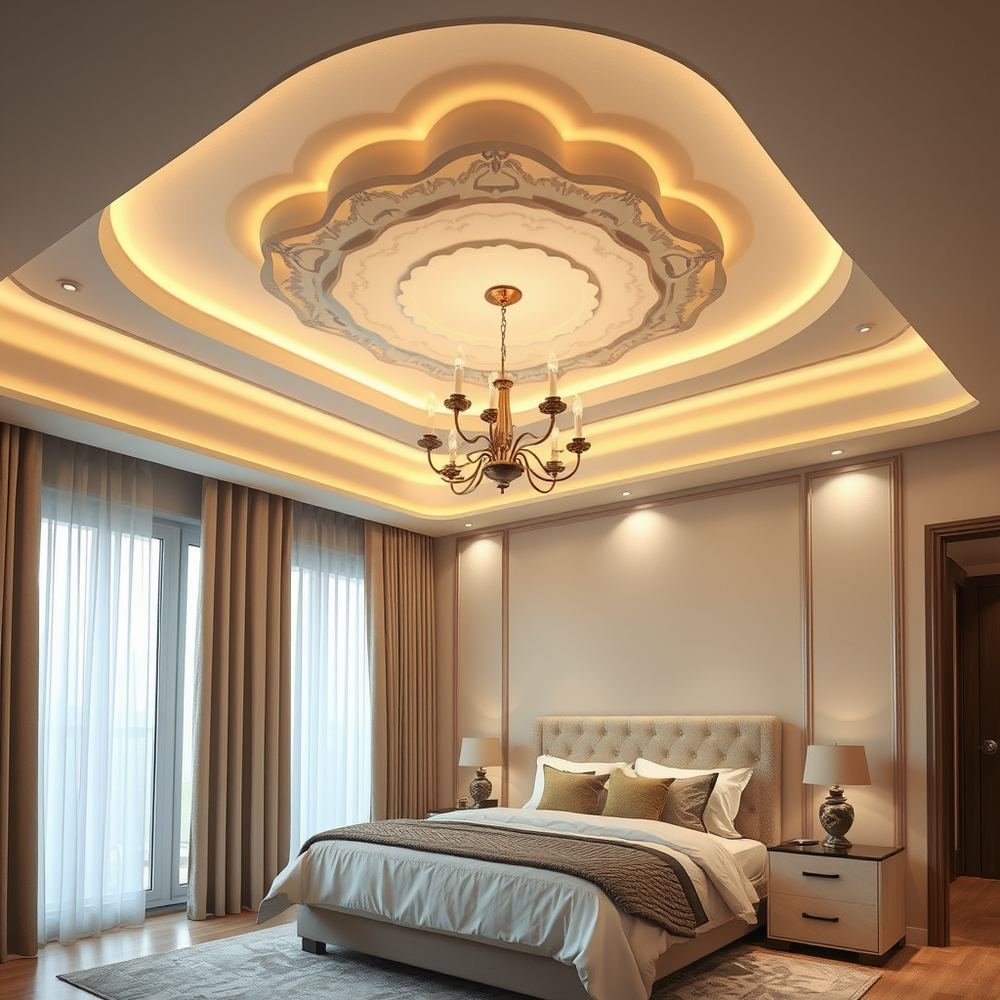
Cove lighting works by hiding a light source in a recess so light washes onto the ceiling and returns to the room indirectly. It succeeds when the strip is invisible, the recess is deep enough to spread the light evenly, and the edge is dead straight. It fails visibly when any one of those is wrong, which is why cove detail looks either seamless or obviously botched, rarely anything in between.
How does cove lighting actually work?
A channel is formed around the perimeter of a false ceiling, or between two ceiling levels. A light strip sits inside that channel, aimed at the ceiling surface above rather than into the room.
Light hits that surface, spreads, and bounces back down as soft indirect illumination. Because you never see the source, the ceiling appears to glow at its edges.
That indirect quality is the point. It produces no glare and no hard shadows, which is why it suits rooms you relax in rather than work in. It is a supplement to task lighting, never a replacement.
Why can I see individual dots of light?
Because the recess is too shallow, the strip is too close to the surface it lights, or the strip has too few emitters spaced too far apart.
Light needs distance to blend. A strip mounted very close to the ceiling above it produces distinct bright spots with darker gaps between them, and once built that is difficult to fix without opening the ceiling.
Getting it right is a design decision made before construction: enough depth in the recess for the light to spread, and a strip with emitters close enough together to merge into a continuous line.
This is the single most common cove lighting failure and it is entirely preventable.
Why does the shadow line look uneven?
Because the edge is not straight.
A cove works by casting a defined shadow along its lip. If that lip wanders even slightly, the shadow varies along its length and the eye reads it immediately as a mistake, because a straight line is the one thing everyone can judge without knowing anything about lighting.
Straightness is a framing and finishing issue rather than a lighting one. It is worth checking the framing before the boards go on, because after finishing it cannot be corrected without rebuilding that section.
The same applies where the cove turns a corner. Corners are where irregularity is most visible.
What colour temperature should you use?
Warmer light generally suits cove lighting, because its purpose is atmosphere rather than task illumination. Cool light in a cove tends to read as institutional rather than relaxing.
More important than the exact temperature is consistency. Mixing temperatures within one room, for example a warm cove with cool downlights, looks wrong even to people who cannot identify why. If the room has both, they should match or be deliberately and clearly separated by function.
Colour quality matters too. Poor quality light makes timber, fabric and paint colours read differently from how they should, which undermines everything else you spent money on in the room.
What has to be decided before it is built?
- Recess depth and profile, which determines whether the light blends.
- Strip position within the recess, which determines whether the source is hidden from every angle in the room, including from a seated position.
- Switching. The cove must be on its own switch, or it is either always on with everything else or never used.
- Dimming, if wanted, since it has to be specified with compatible components rather than added later.
- Access for replacement. Strips do not last forever. If replacing one means dismantling the ceiling, that is a problem stored up for later.
- Power supply position, which needs to be accessible and ventilated rather than sealed inside the ceiling void.
Where does cove lighting work best?
In rooms used in the evening, where soft indirect light is what you want: living rooms, bedrooms and dining rooms.
It works less well as the only light in a room where anything is done that needs proper illumination. A bedroom with only cove lighting is atmospheric and impractical for finding something in a wardrobe.
It works particularly well in rooms with moderate ceiling height, because washing light across the ceiling makes it read as higher than it is, and because a perimeter cove drops only the edges rather than the whole room.
Does it have to run around the whole room?
No, and a partial cove is often better.
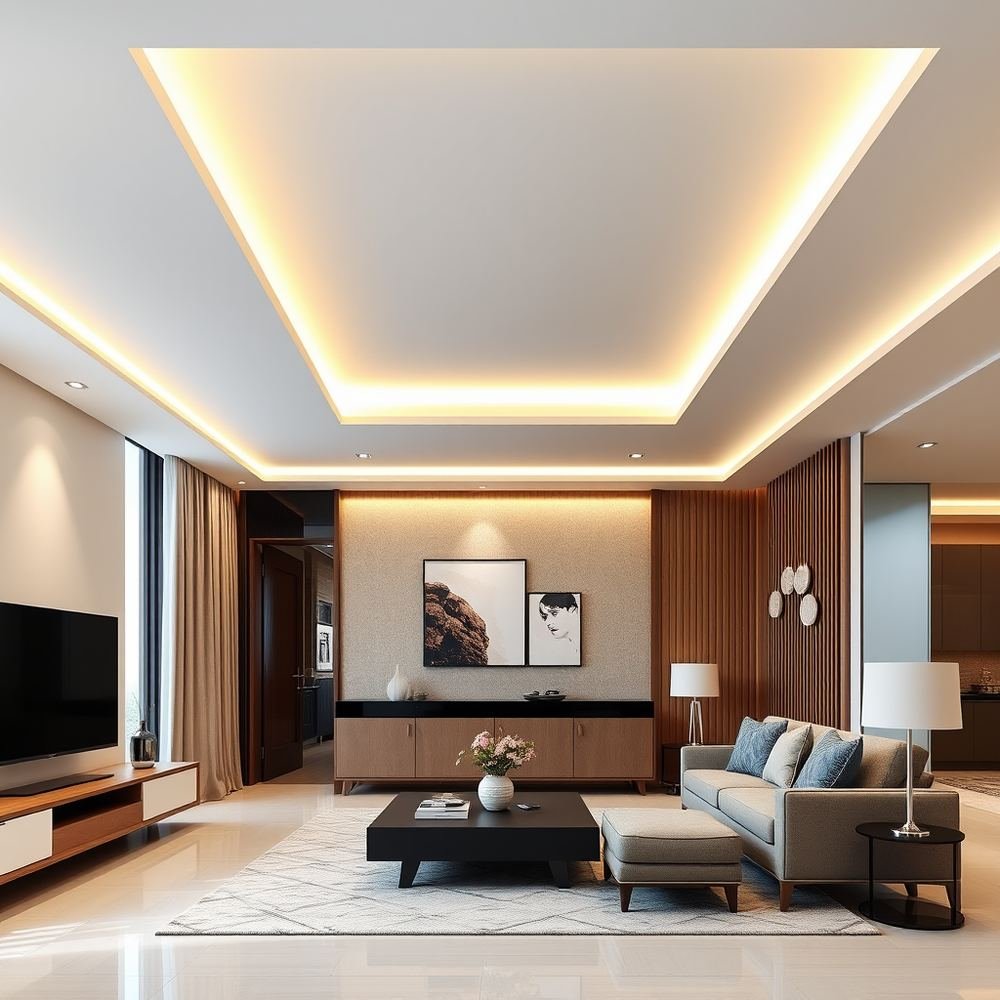
A cove along one or two sides, aligned with the seating or with a media wall, gives the effect while costing less height and less money. It can also create a deliberate asymmetry that reads as designed.
What matters is that the arrangement looks intentional. A cove that runs around three sides and stops arbitrarily on the fourth looks unfinished, whereas one that runs along two facing sides looks like a decision.
What else should align?
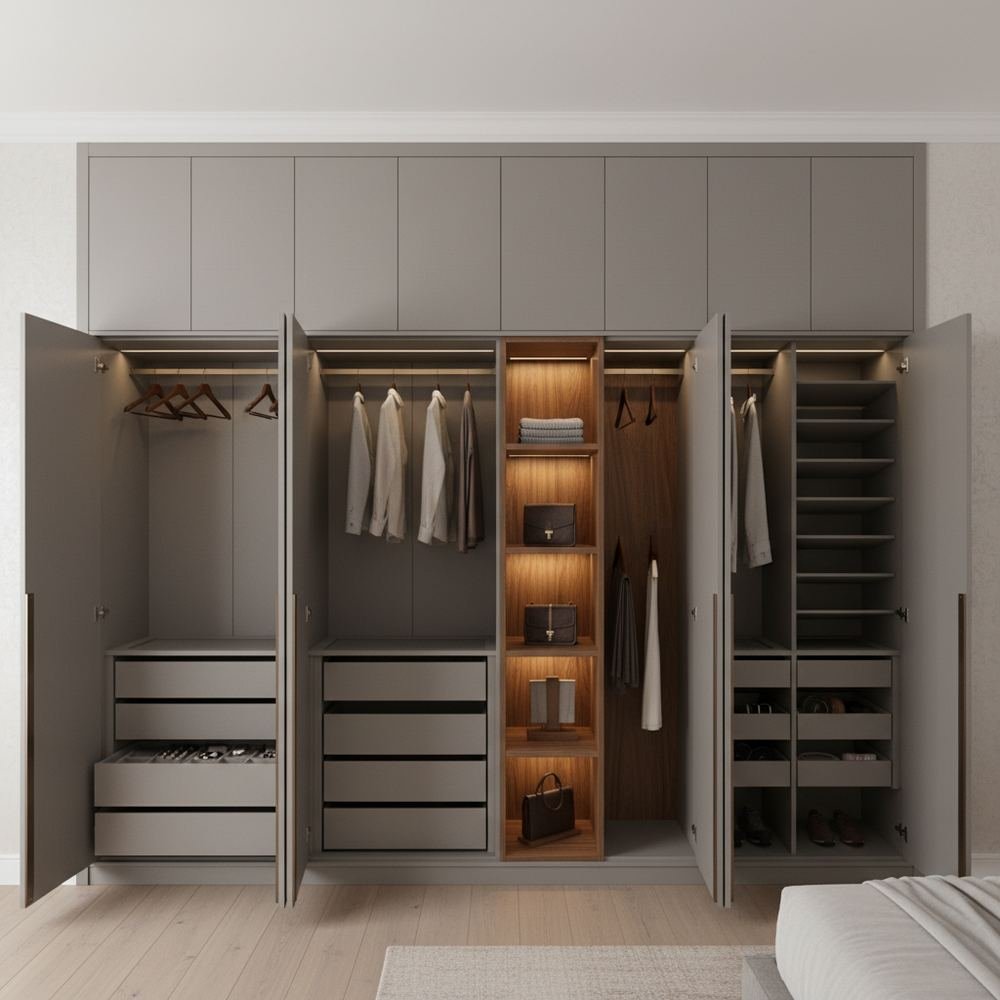
Cove positions should relate to the joinery below them. A cove edge that lines up with a wardrobe run, a panelled wall or the edge of a media wall reads as one designed scheme. One that misses by a small margin reads as two trades working from different drawings.
This is an argument for deciding the ceiling and the joinery together rather than sequentially, which is easier when one company is responsible for both.
Getting it built properly
Grains designs ceilings alongside the lighting layout and the joinery, so recess depths, strip positions, switching and alignment are settled before anything is framed. Everything is built and installed by our own teams, and you see it in 3D beforehand. Measurement, design and estimate are free. Message WhatsApp +92 320 4443864, or see the wider range on our services page.
Questions, answered.
Because the recess is too shallow, the strip sits too close to the surface it lights, or the emitters are spaced too far apart. Light needs distance to blend into a continuous wash. This is decided at design stage, and once the ceiling is built it cannot be fixed without opening it.
Because the lip of the cove is not perfectly straight. A cove works by casting a defined shadow along its edge, so any wander shows immediately, since a straight line is something everyone can judge. It is a framing issue, so check the framing before boards go on rather than after finishing.
Warmer light generally, because cove lighting is for atmosphere rather than task illumination, and cool light in a cove reads as institutional. Consistency matters more than the exact figure: mixing a warm cove with cool downlights in one room looks wrong even to people who cannot say why.
No. It produces soft indirect light with no glare and no hard shadows, which is excellent for atmosphere and poor for anything requiring proper illumination. A bedroom lit only by a cove is atmospheric and impractical for finding clothes. Always pair it with task lighting on a separate switch.
No, and a partial cove along one or two sides is often better, costing less height and money while still giving the effect. What matters is that it looks intentional. A cove running around three sides and stopping arbitrarily looks unfinished, while one along two facing sides reads as a decision.
Recess depth and profile, strip position so the source is hidden from every angle including seated, separate switching, dimming if wanted since it needs compatible components, access for replacing strips later, and a power supply position that is accessible and ventilated rather than sealed in the void.
Planning this for your own home?
We measure your space in Lahore free of charge, show you a 3D design before anything is cut, then manufacture and install it with our own teams.