
Accent Walls and Fluted Panelling: Where They Work and Where They Do Not
One wall doing the work costs a fraction of treating every surface, provided you pick the right wall.
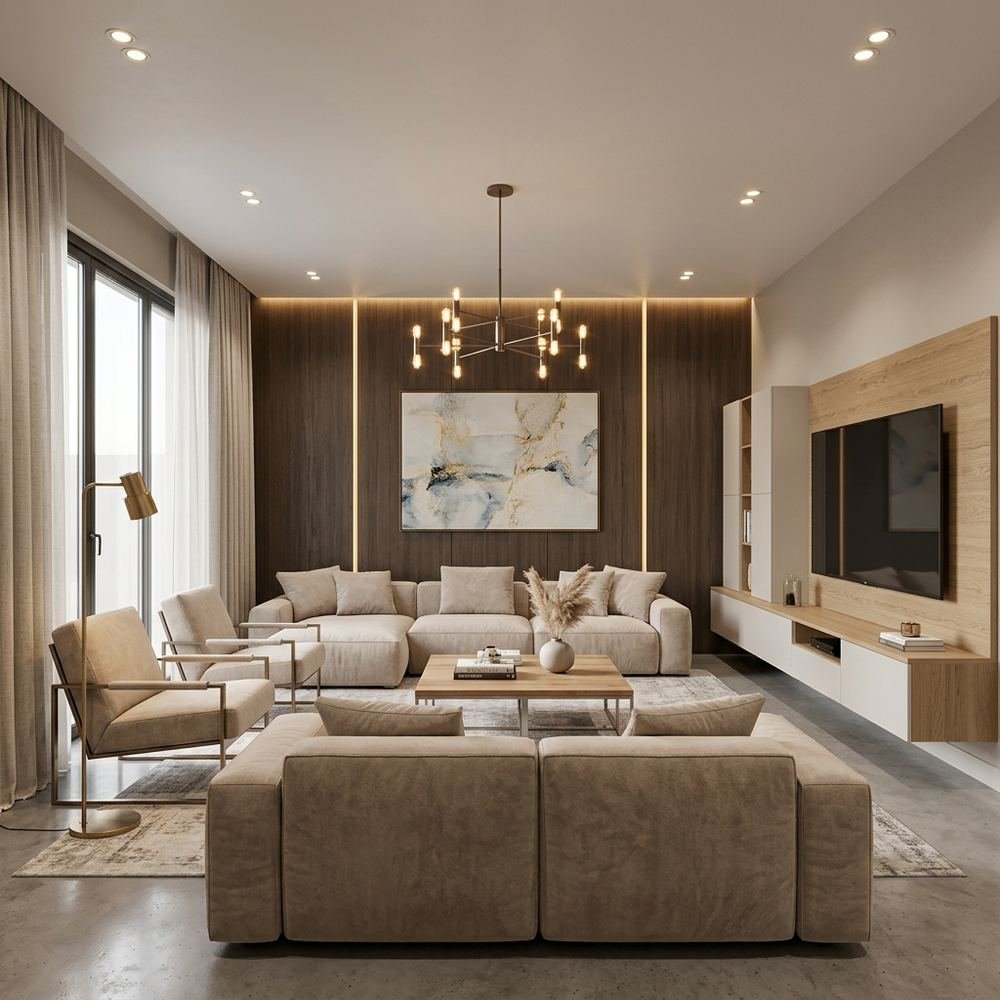
An accent wall works when it sits where the eye already goes and where the room already has a focal point. Panelling it adds texture and shadow without adding colour or pattern, which is why fluted detail has become the default. The mistake is choosing the wall by what is bare rather than by what people actually look at.
Which wall should be the accent wall?
The one the room is already organised around. In a living room that is usually the wall behind the television or the sofa. In a bedroom it is the wall behind the bed. In a dining room it is the wall the table sits against or faces.
Two rules narrow it further. Choose a wall that is largely uninterrupted, since doors, windows and switches break up a panelled surface and make the detail look accidental. And choose the wall you see when you enter, because that is the impression the room gives.
The wall people most often choose wrongly is whichever one happens to be empty. An empty wall is often empty because nothing looks at it, and panelling it draws attention to a part of the room that does not deserve it.
Why has fluting become so common?
Because it adds texture without adding pattern or colour, which makes it unusually easy to live with.
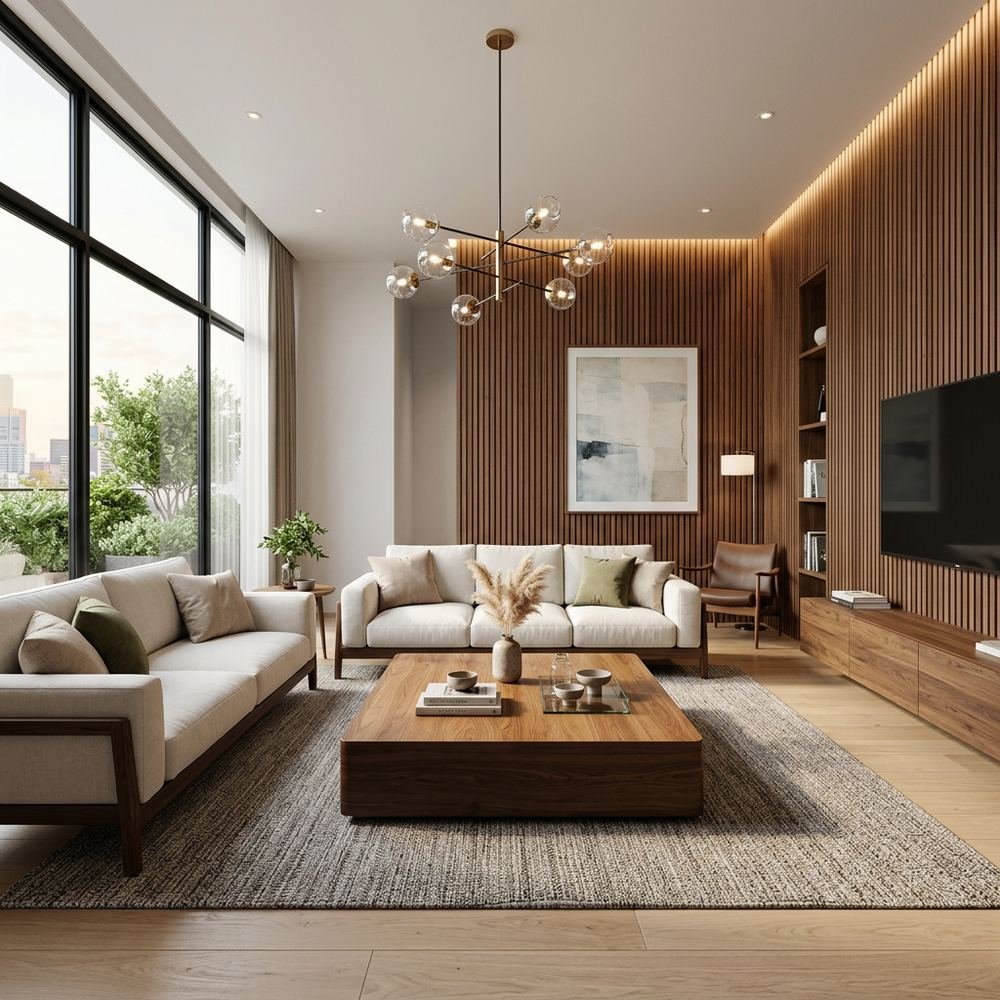
Fluting throws a repeating shadow line that changes as the light moves through the day, so a large flat surface gains depth and movement while staying a single colour. It photographs well, which is part of why it spread, but it also works in person, which is why it has lasted longer than most trends.
It also has a practical benefit: vertical fluting draws the eye upward and makes a room read taller, which is useful in homes with moderate ceiling height.
The risk is overuse. Fluting on one wall is a feature. Fluting on several walls, plus the TV unit, plus the ceiling, stops being a feature and becomes the entire room, which is exactly what dates.
What are the material options?
- Timber or veneered panels. Real grain and warmth. The most expensive and the most durable, and it can be refinished. Suits rooms with other timber elements.
- Laminate faced panels. Consistent colour, hard wearing, and a very wide colour range. Practical in a busy household.
- Painted MDF. Any colour, seamless, and the most flexible for bespoke profiles. Softer, so it marks more easily at knock height.
- Gypsum or plaster detail. Good for architectural mouldings and recesses rather than fine fluting, and it integrates naturally with a false ceiling.
- Stone or tile. Heavy, durable and expensive, and it needs the wall to carry the load. Usually reserved for a specific feature rather than a whole wall.
How does lighting change it?
Completely, and this is the part most often left until too late.
Panelling works by shadow, so the direction of the light determines whether the texture reads at all. Light washing down or up the surface from close to the wall reveals the profile strongly. Light hitting the wall straight on from across the room flattens it, and the panelling you paid for disappears.
Grazing light, positioned close to the wall and directed along it, is what makes fluting look like the photographs. That means the lighting position must be decided before the ceiling is closed and before the wiring is buried.
If a panelled wall is planned, treat its lighting as part of the same decision rather than as a later addition.
Does it date quickly?
Any strong visual choice carries that risk, and there are three ways to reduce it.
Keep it to one wall. A single accent wall can be changed. A room where every surface is treated cannot, without redoing the room.
Choose a neutral colour for the panelling itself and put the personality into things that are easy to change, such as furnishings and art. Panelling in a neutral tone reads as texture rather than as a statement, and texture ages better than colour.
Keep the profile simple. Simple vertical fluting or clean rectangular panels have persisted across decades. Elaborate or unusual profiles tie the room to a moment.
Where does panelling not work?
- On a wall with a damp problem. Panelling conceals damp rather than solving it, and the moisture continues behind it where you cannot see it. Fix the wall first.
- In a wet area, unless the material is specified for it.
- On a wall broken up by doors, windows and switches, where the detail cannot run cleanly.
- Behind a hob, where grease and heat make it a maintenance problem.
- In a very small room where every wall is close, since texture on all sides can feel oppressive.
How does it relate to the joinery?
It should be planned with it, not after it. Panelling that runs into a media wall or a wardrobe at a clean junction reads as one designed element. Panelling that meets joinery at a slightly wrong height or misaligned edge reads as two separate jobs that did not talk to each other.
Where possible, use the same maker for both. When the panelling and the joinery come from the same facility in the same specification, the finishes match exactly, which is difficult to achieve when they are ordered separately.
Alignment with the ceiling detail matters for the same reason.
Is it worth the money?
For one wall, usually yes. Concentrating material and detail on a single surface gives a room a clear focus for a fraction of what treating every wall would cost, and it does more for how a room feels than repainting all four walls a different colour.
For every wall, rarely. At that point you are no longer accenting anything.
Having it made
Grains manufactures wall panelling, accent walls and TV units at its own facility on Raiwind Road in the same specification as the rest of your joinery, so junctions align and finishes match. We plan the lighting alongside the panel design rather than afterwards, and show you the wall in 3D before anything is made. Measurement, design and estimate are free. Message WhatsApp +92 320 4443864, or see the range on our services page.
Questions, answered.
The one the room is already organised around, usually behind the television or sofa in a living room and behind the bed in a bedroom. Choose a wall that is largely uninterrupted by doors, windows and switches, and ideally the one you see on entering. Avoid choosing a wall simply because it is empty.
Because it adds texture without adding colour or pattern, which makes it easy to live with. Fluting throws a repeating shadow line that changes as light moves through the day, so a flat surface gains depth while staying one colour. Vertical fluting also draws the eye upward and makes a room read taller.
Yes, and it decides whether the texture reads at all. Light grazing along the surface from close to the wall reveals the profile strongly, while light hitting it straight on from across the room flattens it and the detail disappears. Lighting position must be decided before the ceiling is closed.
It can, but three things reduce the risk. Keep it to one wall so it can be changed later. Choose a neutral colour so it reads as texture rather than a statement, since texture ages better than colour. And keep the profile simple, because elaborate profiles tie a room to a particular moment.
On a wall with a damp problem, since panelling conceals moisture rather than solving it and the damage continues unseen. Also in wet areas unless the material is specified for it, on walls broken up by doors and switches, behind a hob where grease and heat collect, and on every wall of a very small room.
Where possible, yes. Panelling that runs into a media wall or wardrobe at a clean junction reads as one designed element, while a slight misalignment reads as two separate jobs. Using one facility in one specification also means the finishes match exactly, which is hard to achieve ordering separately.
Planning this for your own home?
We measure your space in Lahore free of charge, show you a 3D design before anything is cut, then manufacture and install it with our own teams.